
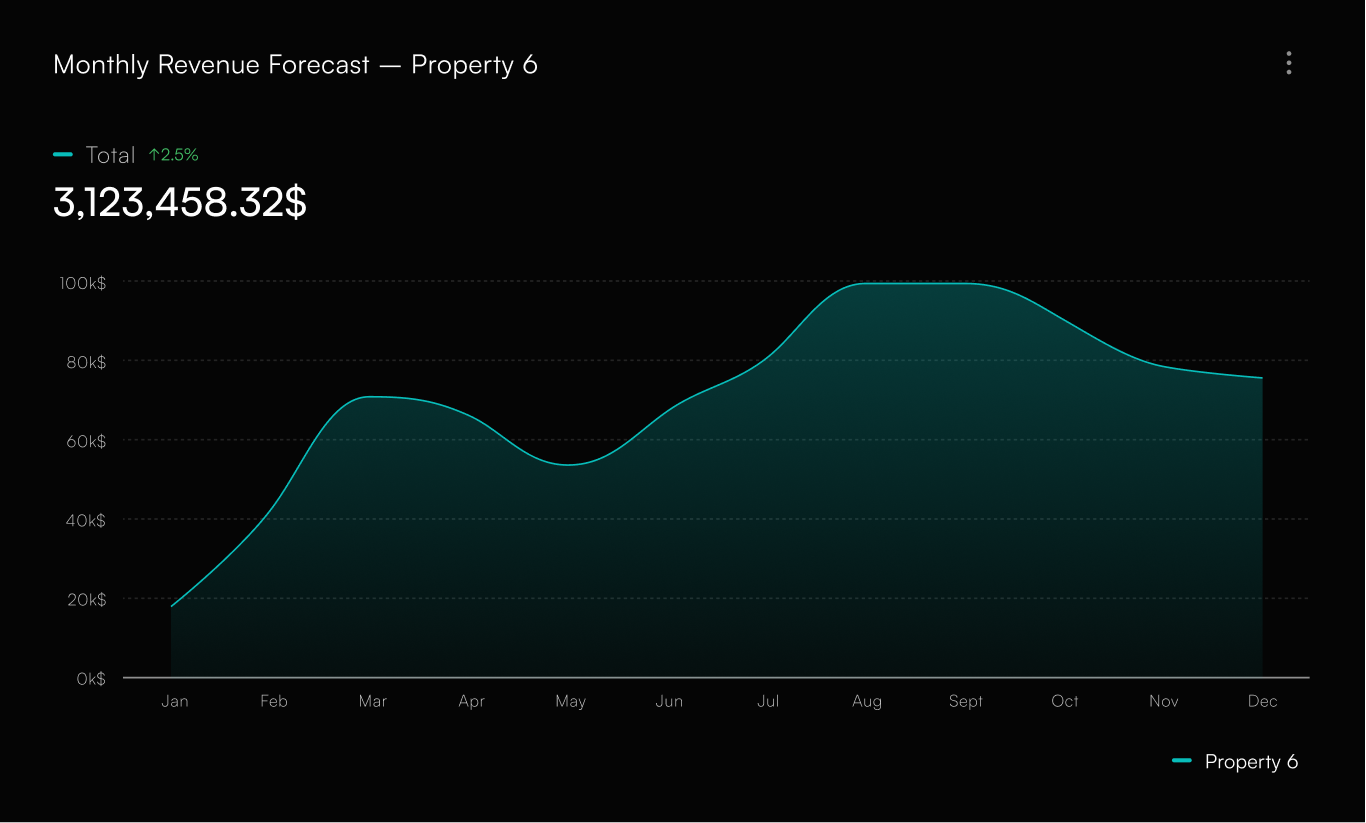
Intro
You're managing a few properties — or maybe a full portfolio. Rent rolls are in spreadsheets. Lease expiries are tracked somewhere else. Market assumptions live in your head. Every quarter, you sit down to "forecast revenue." You tweak a few numbers. Adjust vacancy. Maybe factor in a rent increase. It feels reasonable. But it's mostly guesswork. The problem isn't that you lack data. It's that your data isn't working together. Forecasting isn't about being right — it's about building a system that makes your projections reliable. In this article, you'll learn how to forecast revenue with more confidence using a simple, practical system you can apply immediately.
What is revenue forecasting (really)?
Most people think revenue forecasting is: "Estimating how much rent I'll collect next month or next year." That's incomplete. In real estate, forecasting is a system that combines time-based data (leases, expiries, escalations), operational data (occupancy, turnover, concessions), and market context (rent trends, demand, seasonality). It's not just projecting numbers — it's understanding what will happen and why. For example, a lease expiring in 3 months isn't just a date. It's a potential vacancy, a rent reset, or a renewal opportunity. A good forecast captures that context automatically.
Why it matters (in real estate terms)
Better forecasting directly impacts how you run your assets. ROI improves because you make better calls on rent pricing, renovations, and acquisitions. Decisions get faster — you don't rebuild assumptions every time, the system updates itself. Risk becomes visible: upcoming vacancies, weak assets, and cash flow dips are no longer surprises. And operations get cleaner — less time in spreadsheets, more time acting on insights. Without a solid forecasting system, you end up with overestimated revenue, missed leasing risks, poor timing on investments, and inefficiencies as you scale. At 2–3 properties, you can manage this manually. At 10+? It breaks.
The practical framework
Step 1 — Understand your data
Start with the basics. You don't need everything. Focus on rent per unit, lease start and end dates, occupancy and vacancy, historical turnover, and operating costs at a high level. Your data likely lives in spreadsheets, property management tools, and accounting software. The goal isn't perfection — it's having just enough to see patterns.
Step 2 — Structure the information
This is where most people fail. If your data isn't structured, you can't forecast properly. Use a simple hierarchy: Portfolio → Property → Unit. At each level, track revenue, occupancy, and lease timelines. For example: at the portfolio level, total projected revenue next quarter; at the property level, expected vacancy rate; at the unit level, lease expiry and potential rent change. Once structured, your data starts to behave like a system — not a collection of files.
Step 3 — Prioritize what actually moves revenue
Not all data matters equally. Focus on the drivers: lease expiries in the next 3–6 months, units below market rent, high-turnover properties, and vacancy trends. A simple way to prioritize: high impact + high uncertainty deserves attention now; low impact + stable can be monitored later. A fully occupied building with long-term tenants is low priority. A property with 30% of leases expiring soon is high priority. This is where forecasting becomes useful — it tells you where to look.
Step 4 — Turn insights into decisions
Forecasting is useless if it doesn't change what you do. Use your projections to act on pricing (adjust rent ahead of renewals), leasing strategy (start marketing before vacancies hit), renovations (upgrade units where you can push rent), and acquisitions (identify properties with upside potential). If your forecast shows a revenue dip in 2 months due to expiries, you don't wait. You reach out to tenants, adjust pricing strategy, and plan occupancy recovery. That's the difference between reactive and proactive management.
Step 5 — Iterate and improve
Your first forecast won't be perfect. That's fine. What matters is tracking actual vs projected revenue, understanding where you were wrong, and improving assumptions over time. Over a few cycles, your forecasts become sharper — and more reliable.
How to apply this
If you're solo
Keep it simple. You can do this with a well-structured spreadsheet and a monthly update routine. Focus on lease expiries, expected rent changes, and basic vacancy assumptions. Even a basic system is better than gut feel.
If you're managing a portfolio or team
You need more structure. At minimum: centralized data (not scattered files), shared visibility across properties, and standardized reporting. This is where dashboards become powerful. Instead of rebuilding forecasts manually, you see upcoming risks instantly, compare properties easily, and align your team on the same data. Tools can help — but only if your structure is clear first.
Common mistakes
Tracking too many metrics — more data doesn't mean better forecasting; focus on what drives revenue. Overcomplicating dashboards — if you can't explain it simply, you won't use it. Not acting on the data — a forecast that doesn't lead to decisions is wasted effort. Relying only on historical data — the past doesn't capture future lease events or market shifts. Updating too infrequently — a quarterly forecast updated once is already outdated.
Conclusion
Forecasting revenue with confidence isn't about predicting the future perfectly. It's about building a system that connects time (leases), data (rent, occupancy), and context (market conditions). Most real estate professionals don't need more data. They need more clarity. Start simple: track your leases, structure your data, focus on what matters. From there, your forecasts stop being guesses — and start becoming decisions.